
- Understanding the patterns of antibiotic resistance in common uropathogens isolated from adult UTI patients.>To determine the particular antibiotics to which uropathogens show the greatest resistance. >To evaluate the impact of antimicrobial resistance on treatment options for UTIs in adults.
Abstract
Urinary tract infections are a major global health concern that has a substantial impact on mortality and morbidity rates as well as treatment costs. Antimicrobial resistance is making this issue extremely challenging to handle, particularly in developing nations like Pakistan where Escherichia coli is increasingly exhibiting quinolone resistance. 500 UTI patients' urine samples were analyzed as part of a retrospective study to determine patterns of antimicrobial resistance. Escherichia coli was found to be the most frequently isolated pathogen, and the results showed a significant incidence of AMR. The majority of patients in the samples were female (58.8%), and the elderly patients had the highest frequency of UTIs (34.4% of patients over 60). The uropathogens were relatively responsive to Vancomycin and Linezolid, but extremely resistant to Amoxicillin, Ampicillin, and Ciprofloxacin. As a result, these findings ought to support cautious antibiotic usage, ongoing monitoring for novel antibiotic-resistant bacteria, and research for improved AMR management.
Keywords
Antimicrobial Resistance, Urinary Tract Infections, Uropathogens, Public Health
Introduction
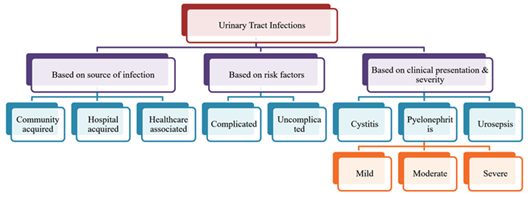
Among health-associated infections (HAIs), urinary tract infection (UTI) is the most prevalent health concern affecting a substantial number of people globally either in society or hospital settings leading to increased morbidity, mortality, and financial impact both in developed and developing countries resulting in approximately 100,000 hospitalizations, in accordance with the National Ambulatory Medical Care Survey. The Centers for Disease Control and Prevention estimate that indwelling urinary catheters are responsible for 75% of UTIs, which result in about 13,000 fatalities each year in the US alone. Among critically ill hospitalized patients who remain in the intensive care unit for more than 48 hours, the rate of CAUTI per 1000 catheter days is still high. It is estimated that nearly 50-60% of women experience at least one episode of UTI in their life (Ahmed et al., 2019).>The basic cause of UTIs is typically Gram-negative bacteria, including Escherichia coli, Proteus, Acinetobacter, Klebsiella, Pseudomonas aeruginosa, Citrobacter & Enterobacter species. Gram-positive bacteria such as Staphylococcus saprophyticus, Enterococcus & Coagulase-negative Staphylococcus are again the reason for causing UTIs(Saha et al., 2015). Compared to nonpathogenic bacteria, the bacteria that cause UTIs retain more aggressive determinant factors that improve their ability to attach and invade host cells. These bacteria avoid the host's immune system with the help of various virulent factors, containing pili, capsules, lipopolysaccharides, and additional cell surface structures. Furthermore, certain physical and physiological factors in humans contribute to the increased occurrence of UTIs. For instance, females have a smaller urethra distinguished from males, which increases their susceptibility to getting UTIs (Kaye et al., 2021).>Among many other considerations, the clinical classification of community or healthcare-acquired UTIs into severe and uncomplicated categories dictates the anti-microbial medicines that can be used to treat them. Patients with renal failure, structural urinary tract anomalies such as urine blockage and retention, or those who use medical devices like catheters are at risk for developing complicated UTIs, which necessitate long-term treatment. Immunosuppression and prior antibiotic exposure are also linked to complicated UTIs. This type of UTI raises the possibility of recurring and/or chronic infections. Patients without structural anomalies of the urinary tract and without the use of urinary tract instrumentation are at risk for developing uncomplicated UTIs (Kot, 2019).
Figure 1
Classification of Urinary Tract Infections (Devnikar et al., 2024)
In the past few years, there has been an unceasing upsurge in drug resistance among>uropathogens, leading to more intricate treatment decisions. The Infectious Diseases Society>of America (IDSA) in 1999, has been made in understanding the epidemiology and clinical>significance of drug resistance in these infections following the release of treatment guidelines>for uncomplicated UTIs and pyelonephritis (Uppal et al., 2022). This led to the need for reassessment of the guidelines for diagnosing and treating uncomplicated UTIs, particularly considering the correlation between these infections and the escalating antimicrobial resistance among uropathogens. The simplest definition of anti-microbial resistance (AMR) is "the resistance of microorganisms to a given antimicrobial drug to which it was once sensitive." A worrying lack of novel antibiotics to combat the growing problem of antimicrobial resistance was highlighted in a WHO report on the development of antibacterial drugs. The majority of medications in the clinical pipeline are merely short-term fixes for illnesses resistant to antibiotics; they are adaptations of currently available antibiotics (Aljeldah, 2022).>AMR deeply affected global healthcare costs and outcomes have only gotten worse due to microbial pathogens' continuous evolution and development of resistance to both traditional and novel treatment approaches, in addition to a sharp decline in antibiotic research. AMR has only worsened the situation due to an increase in the use of antibiotics instead of over-the-counter alternatives. This increases the possibility that many diseases will appear again; one such instance is the rise of extensively drug-resistant tuberculosis, or XDR-TB. Antibiotics are owned by modern cure (Hrbacek et al., 2021). The empirical methods used to treat UTI typically involve selecting an initial oral antibiotic based on a variety of factors. The Infectious Diseases Society of America recommends the three-day TMP-SMX course, the five-day NFT course, or the single dose of Fosfomycin. Conversely, Fosfomycin, NFT, or pivmecillinam are suggested as first-line therapies by the European Association of Urology (Galindo-Méndez, 2020).>Antimicrobial resistance (AMR) in important pathogens is widespread globally and is recognized as a serious world health concern. It has become extremely difficult, particularly in LMICs, to strike a compromise between inexpensive, easily accessible antimicrobials that can save lives and prevent their abuse, which could result in the rapid selection of AMR. According to the Sampling in the Region for Monitoring Antimicrobial Resistance Trends, a laboratory-based surveillance program conducted between 2009 and 2010, the rate of fluoroquinolone and third-generation cephalosporin resistance in urinary tract Escherichia coli isolates from patients with upper UTIs makes the situation especially dire in the Asia-Pacific region (Li et al., 2022).>AMR is a bigger threat to human health and welfare that demands global and necessary measures to address. It indisputably brings more difficulties into the cases that require medical treatment in longer hospital stays, higher expenses, and sometimes lethality. A study utilizing GPIU data from Asia indicates that from 2004-2013, cephalosporins (34.4%) and fluoroquinolones (24.1%) were ultimately the most used antibiotics for UTI having high resistance rates. In underdeveloped countries, rapidly increasing drug resistance is one of the most acute problems. South Asia is one of the principal domains for Gram-negative bacteria which are the main culprits of antibiotic resistance (Foxman, 2010). Pakistan is among the developing South-Asian countries having a threat of antibiotic resistance which is a critical problem not only for Pakistan but also for the entire world. In the past few years, in Pakistan, Multidrug-resistant and extensively drug-resistant bacteria have been recognized as a serious bacterial problem (Miller & Tang, 2004). In the last decade, In Pakistan, the rate of resistance to quinolones for Enterobacteriaceae has been rising. The cause of this situation is illustrated in a number of studies that include inappropriate medication prescription, illogical prescribing, inducements for overprescribing, self-cure, lack of correct preparation, no awareness about sensitivity tests, and the unfinished drug by the patient himself (Sugianli et al., 2021).>AMR has become a chief danger to global community health. It has been risked that by the year 2050, deaths by AMR could be more than 10 million per year. 204 nations and domains data described the distressing impact that AMR-associated passing rates even surpassed HIV/AIDS or malaria. The Islamabad Diagnostic Center (IDC) from 75 different branches all around Pakistan disclosed that several patients, after antibiotic treatment, were partially treated (unable to give full recovery) or did not respond at all and left unyielding or negative. The consequence of such individuals using sensitive antibiotics, not fully treated or only partially treated is that they lose their time to use the drugs (Mlugu et al., 2023).
Objectives
Methodology
Study Population>A total of 500 patients attending the tertiary care teaching hospital (Jinnah Hospital) in Lahore, Pakistan enrolled in the study. The 500 patients of whom (294) were females and (206) were males. > >Study Design>A retrospective cross-sectional study was carried out by the authors between September 15, 2024, and January 15, 2024. A pre-made data collecting tool (Data acquisition Form) was used to extract the data. The extracted data includes the following: study design (population-based and/or laboratory-based, age group, sex, sample size, resistance/susceptibility, and specimens collected); pathogen identification (Escherichia coli, NLF, Staphylococcus aureus, Enterobacter, Pseudomonas aeruginosa, Enterococcus, Streptococcus pneumoniae, and Klebsiella pneumoniae). Dysuria, urgency, frequency, flank pain, fever, chills, nausea, vomiting, suprapubic sensitivity, use of Foley catheter, and fever w/o any discernible focus were all included in the criteria for a patient to be deemed symptomatic. Eligibility was restricted to patients who had taken antibiotics within the previous seven days.>The antimicrobial susceptibility test results were collected for co-trimoxazole (SXT), ciprofloxacin (CIP), levofloxacin (LVX), ceftriaxone (CRO), cefuroxime (CFU), imipenem (IPM), gentamicin (GEN), amikacin (AMK), piperacillin/tazobactam (TZP), amoxicillin (AMX), doxycycline (DOX), ampicillin (AMP), fosfomycin (FOS), vancomycin (VAN), teicoplanin (TEC), linezolid (LZD), meropenem (MEM), colistin (COT), and nitrofurantoin (NIT), as susceptible or resistant, as reported in the article (Organization, 2020). For studies reporting resistance prevalence data for multiple populations, e.g. outpatients and inpatients, data were extracted for each study population.> >Inclusion Criteria>All patients who have shown bacterial growth in urine samples were included.> >Exclusion Criteria>The patient's urine samples showing no bacterial growth were excluded.>The patient's urine samples showing fungal growth were excluded.> >Data collection>Data collection was done on inpatients and outpatients who were diagnosed with UTI based on urine sample tests. Data extraction was carried out using a standardized form to ensure consistency. We didn't take the identity of patients by taking care of their privacy. Patients of adult age and all genders were included. We put all relevant information from patients' reports on an Excel sheet i.e. sample, age, sex, pathogen, and drug susceptibility and resistance. Microbiological data focused on uropathogens including E. coli, Klebsiella, and others with susceptibility to antibiotics including ampicillin, ciprofloxacin, and others. To ensure accuracy, data was double-checked, and any missing data was excluded from the analysis.
Analysis
Unless otherwise noted, data was coded, validated, and then placed into an Excel sheet before being examined using SPSS IBM Version 22. Estimates of the frequencies and percentages were made using descriptive analysis. Using Karl Pearson's chi-square test, the relationship between independent variables like demographics and dependent variables like infections and their susceptibility or resistance was calculated. Statistics were deemed significant when the alpha value was 0.05 or less (Organization, 2020).
Results
Table 1>Frequency Distribution of Variables
| Variable width="50%">N (%) | > Age | > less than 18 width="50%">47 (9.4%) | > 18–38 width="50%">118 (23.6%) | > 39–59 width="50%">163 (32.6%) | > >60 width="50%">172 (34.4%) | > Gender | > Female width="50%">294 (58.8%) | > Male width="50%">206 (41.2%) | > Sample | > Urine width="50%">500 (100%) | > Pathogen Isolated | > Streptococcus width="50%">4 (0.8%) | > Staphylococcus width="50%">14 (2.8%) | > MRSA width="50%">2 (0.4%) | > Pseudomonas width="50%">37 (7.3%) | > NLF width="50%">23 (4.6%) | > Klebsiella width="50%">87 (17.3%) | > Enterococcus width="50%">59 (11.7%) | > Enterobacter width="50%">18 (3.6%) | ||||
Table 2>Pathogen, Gender, Age Susceptibility
| Pathogen Susceptibility | > Pathogen colspan="4" width="26%">Resistant width="33%">Sensitive | > Streptococcus>Staphylococcus>MRSA>Pseudomonas>NLF>Klebsiella>Enterococcus>Enterobacter>E. coli>Acinetobacter> colspan="4" width="26%">02>13>02>31>20>81>52>18>242>06 width="33%">02>01>00>06>03>06>07>00>08>00 | > Gender Susceptibility | > Gender colspan="2" width="26%">Resistant colspan="2" width="33%">Sensitive | > Male>Female colspan="2" width="26%">192>275 colspan="2" width="33%">14>19 | > Age Susceptibility | > Age width="25%">Resistant colspan="2" width="33%">Sensitive | > less than 18>18-38>39-59>>60 width="25%">44>109>149>165 colspan="2" width="33%">03>09>14>07 | |||||||||||||||||||||
Table 3>Antimicrobial Agent Susceptibility (Lab Reports) width="100%">
Antimicrobial Agent Susceptibility
Antimicrobial Agent
width="21%">Total Lab Reports
width="23%">Resistance
width="21%">Sensitivity
Nitrofurantoin
width="21%">438
width="23%">254 (57.9%)
width="21%">184 (42.1%)
Ciprofloxacin
width="21%">489
width="23%">434 (88.7%)
width="21%">55 (11.3%)
Amoxicillin
width="21%">485
width="23%">467 (96.2%)
width="21%">18 (3.8%)
Ampicillin
width="21%">478
width="23%">455 (94.9%)
width="21%">23 (5.1%)
Gentamycin
width="21%">439
width="23%">272 (61.9%)
width="21%">167 (38.1%)
Imipenem
width="21%">432
width="23%">159 (36.8%)
width="21%">273 (63.2%)
Meropenem
width="21%">427
width="23%">180 (42.1%)
width="21%">247 (57.9%)
Amikacin
width="21%">459
width="23%">164 (35.7%)
width="21%">295 (64.3%)
Levofloxacin
width="21%">477
width="23%">399 (83.6%)
width="21%">78 (16.4%)
Doxycycline
width="21%">466
width="23%">404 (86.6%)
width="21%">62 (13.4%)
COT
width="21%">431
width="23%">375 (87.0%)
width="21%">56 (13%)
Ceftriaxone
width="21%">338
width="23%">316 (93.4%)
width="21%">22 (6.6%)
Colistin
width="21%">91
width="23%">10 (10.9%)
width="21%">81 (89.1%)
Fosfomycin
width="21%">446
width="23%">191 (42.8%)
width="21%">255 (57.2%)
Cefuroxime
width="21%">427
width="23%">401 (93.9%)
width="21%">26 (6.1%)
TZP
width="21%">457
width="23%">391 (85.5%)
width="21%">66 (14.5%)
Vancomycin
width="21%">85
width="23%">12 (14.1%)
width="21%">73 (85.9%)
Teicoplanin
width="21%">86
width="23%">12 (13.9%)
width="21%">74 (86.1%)
Linezolid
width="21%">84
width="23%">04 (4.7%)
width="21%">80 (95.3%)
Figure 2
Figure 2>Distribution of urinary pathogens isolated from patients with UTIs at Jinnah Hospital, Lahore
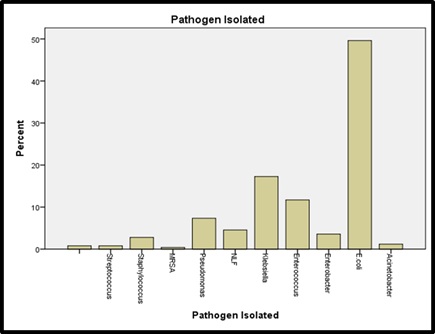
Hospital's Microbiology Laboratory in Lahore. There were 294 (58.8%) females and 206 (41.2%) males among them. The following age groups were included in the analysis: under 18 (9.4%), 18–38 (23.6%), 39–59 (32.6%), and above 60 (34.4%). [Table 1] displays the frequency, age distribution, and gender distribution of UTI cases admitted to Jinnah Hospital's IPD and OPD in Lahore. Isolated E. Coli, Klebsiella, enteric bacteria, and staphylococcals are the most prevalent urine pathogens. A summary of the frequency distribution of bacteria isolated from UTI patients can be seen in [Table 1]. >Almost 93% of both males (192) and females (275) show resistance against antimicrobial agents. However, females have a higher chance of acquiring UTIs as compared to males due to some physiological factors that contribute to the increased incidence of UTIs. The highest resistance is seen among patients with age >60. Among all the pathogens, E. coli shows the highest resistance rate to antimicrobial agents. The gender and age susceptibility data are also shown in [Table 2]. >When tested against Amoxicillin (96.2%), Ampicillin (95.1%), Cefuroxime (93.9%), Ceftriaxone (93.4%), Ciprofloxacin (88.7%), Co-trimoxazole (87.0%), Doxycycline (86.6%), and Levofloxacin (83.6%), the common urinary pathogens exhibited substantial resistance rates. In comparison, intermediate resistance rates were found against Gentamycin (61.9%), Nitrofurantoin (57.9%), Fosfomycin (42.8%), and Amikacin (35.7%). While low resistance rates were found against Vancomycin (14.1%), Teicoplanin (13.9%), Colistin (10.9%), and Linezolid (4.7%) [Table 3].
Discussion
AMR is a persistent global issue that is getting worse in the twenty-first century. It is regarded as the primary hazard to public health. The quantity of drug-resistant microbe strains, the geographic regions where drug resistance is prevalent, and the degree of resistance are all increasing in each organism. Hence, pathogens that were previously believed to be amenable to antibiotics are making a comeback to these treatments in unprecedented ways. Antibiotic resistance in organisms, especially resistance to several antibiotics, is on the rise and will continue to do so (Khan et al., 2024).>In the present investigation, E. coli was the most often isolated pathogen from individuals with UTIs. Coli has been connected to 50% of cases. 3.6% of the urine samples had Enterobacter species in second place. Antibiotic resistance can also be prevented by addressing several additional issues, including erroneous diagnosis, illogical antibiotic use, and even irregular drug utilization because of improper prescription or poor compliance.>A conclusive diagnosis is defined as the identification or isolation of one or more urinary tract pathogens that have been identified based on culture. The most infected age group was >60 years old (34.4%), followed by 39-59 years (32.6%), 18-38 years (23.6.6%), and <18 years old (9.4%). Thus, an increased infection rate in elderly patients is reported. In urine specimens, females predominated (58.8% vs. 41.2%), necessitating long-term preventive medication to avoid it. Wiping the genital areas from front to back is crucial to preventing recurrent UTIs in females because rectal bacteria colonize the urethral and subsequently ascend to the bladder, causing RUTI.>Antibiotic-resistance pattern showed full resistance to Amoxicillin 96.2% among all bacterial isolates, followed by Ampicillin 94.9% and cefuroxime 93.9%. Also increased resistance to ceftriaxone, Ciprofloxacin, and COT is 93.4%, 88.7%, and 87% respectively. Mutation-dependent overproduction of lactamase and intrinsic- prolonged inappropriate administration of these drugs described by doctors are considered the main causes of resistance. >Vancomycin, teicoplanin, and colistin resistance in the isolated bacteria in this investigation were incredibly low, at 14.1%, 13.9%, and 10.9%, respectively. The corresponding resistance rates to imipenem, nitrofurantoin, meropenem, and gentamicin were 36.8%, 42.1%, 57.9%, and 61.9%. Due to its 95.3% sensitivity, linezolid is the most effective medication against uropathogens, according to our study. According to reports, 50% of uropathogenic E. coli strains are resistant to most medications. By identifying the most effective empirical treatment options for antibiotics, allocating healthcare resources in an economically sound manner, and halting the rapid global development of antibiotic resistance, monitoring antibiotic resistance plays a significant role in improving patient care.
Conclusion
The research findings report a high proportion of antibiotic-resistant uropathogens that are responsible for UTs in Pakistan. Research conducted indicates that microbial resistance to normally used antibiotics, including fluoroquinolones and beta-lactams, has escalated, thus posing treatment challenges. The increased occurrence of multidrug-resistant strains underlines the necessity of constant monitoring, proper use of antibiotics, and good control programs to come up with treatment plans and make them available to the public greater sight emphasizes its importance.>Due to rapidly increasing rates of AMR and MDR E. coli, limited empiric therapy choices are available to treat UTIs. This study can also assist physicians in making appropriate empirical treatments making advancements in antimicrobial stewardship in hospital settings and using new oral antibiotics due to increasing resistance to E. coli in Pakistan.
Appendix
Declaration>Author Confirmation>This confirms that all of the listed authors have read and approved the paper and that no more individuals have met the requirements for authorship but have not yet been added.> >Data Availability Statement>The article contains the study's unique contributions; additional questions can be forwarded to the corresponding author.> >Ethics Statement>The Punjab University, Lahore Institutional Ethical Review Board evaluated the study after determining it to be low risk.> >Acknowledgments>All patients who gave their permission to take part in this study are acknowledged by the authors.> >Author Contributions>FH: Conceptualization, leadership, Writing review & editing. FP: Methodology, Formal analysis, Writing an original draft. DA: Research, and Write an original draft. KT, SG: Conceptualization, Writing an original draft. MN: Visualization, Writing review & editing. All authors read and approved the submitted version.> >Conflict of Interest>The study was carried out without any financial or commercial ties that would have created a conflict of interest, according to the authors.> >Funding>No particular grant from a government, private, or nonprofit funding organization was obtained.
References
-
Ahmed, S. S., Shariq, A., Alsalloom, A. A., Babikir, I. H., & Alhomoud, B. N. (2019). Uropathogens and their antimicrobial resistance patterns: Relationship with urinary tract infections. International journal of health sciences, 13(2), 48–55.
-
Aljeldah M. M. (2022). Antimicrobial Resistance and Its Spread Is a Global Threat. Antibiotics (Basel, Switzerland), 11(8), 1082. https://doi.org/10.3390/antibiotics11081082
-
Devnikar, A. V., Solabannavar, S. S., Sonth, S. B., Janagond, A. B., Gokale, S., & Bhurle, A. (2024). Antimicrobial Resistance in Escherichia coli Causing Urinary Tract Infection: A Four-Year Study. Journal of Pure and Applied Microbiology, 18(1), 522–527. https://doi.org/10.22207/jpam.18.1.35
-
Foxman B. (2010). The epidemiology of urinary tract infection. Nature reviews. Urology, 7(12), 653–660. https://doi.org/10.1038/nrurol.2010.190
-
Galindo-Méndez, M. (2020). Antimicrobial resistance in Escherichia coli. In E. coli infections Importance of early diagnosis and efficient treatment. IntechOpen. https://www.intechopen.com/chapters/72615
-
Hrbacek, J., Cermak, P., & Zachoval, R. (2021). Current antibiotic resistance patterns of rare uropathogens: survey from Central European Urology Department 2011-2019. BMC urology, 21(1), 61. https://doi.org/10.1186/s12894-021-00821-8
-
Kaye, K. S., Gupta, V., Mulgirigama, A., Joshi, A. V., Scangarella-Oman, N. E., Yu, K., Ye, G., & Mitrani-Gold, F. S. (2021). Antimicrobial Resistance Trends in Urine Escherichia coli Isolates From Adult and Adolescent Females in the United States From 2011 to 2019: Rising ESBL Strains and Impact on Patient Management. Clinical infectious diseases: an official publication of the Infectious Diseases Society of America, 73(11), 1992–1999.
-
Khan, A., Saraf, V. S., Siddiqui, F., Batool, T., Noreen, Z., Javed, S., Ahmad, A., Alonazi, W. B., Ibrahim, M., Pucciarelli, S., & Bokhari, H. (2024). Multidrug resistance among uropathogenic clonal group A E. Coli isolates from Pakistani women with uncomplicated urinary tract infections. BMC microbiology, 24(1), 74. https://doi.org/10.1186/s12866-024-03221-8
-
Kot B. (2019). Antibiotic Resistance Among Uropathogenic Escherichia coli. Polish journal of microbiology, 68(4), 403–415. https://doi.org/10.33073/pjm-2019-048
-
Li, X., Fan, H., Zi, H., Hu, H., Li, B., Huang, J., Luo, P., & Zeng, X. (2022). Global and Regional Burden of Bacterial Antimicrobial Resistance in Urinary Tract Infections in 2019. Journal of Clinical Medicine, 11(10), 2817. https://doi.org/10.3390/jcm11102817
-
Miller, L. G., & Tang, A. W. (2004). Treatment of uncomplicated urinary tract infections in an era of increasing antimicrobial resistance. Mayo Clinic Proceedings, 79(8), 1048–1054. https://doi.org/10.4065/79.8.1048
-
Mlugu, E. M., Mohamedi, J. A., Sangeda, R. Z., & Mwambete, K. D. (2023). Prevalence of urinary tract infection and antimicrobial resistance patterns of uropathogens with biofilm forming capacity among outpatients in Morogoro, Tanzania: a cross-sectional study. BMC infectious diseases, 23(1), 660. https://doi.org/10.1186/s12879-023-08641-x
-
Saha, S., Rahman, S., Hassan, F. M. N., Sarkar, S., Islam, K., Saha, P., Alam, B., Sultana, N., Rahman, K. M. T., Sumi, S. S., Islam, F., & Hasan, S. (2015). Antimicrobial Resistance in Uropathogen Isolates from Patients with Urinary Tract Infections. Biomedical Research and Therapy, 2(5). https://doi.org/10.7603/s40730-015-0011-3
-
Sugianli, A. K., Ginting, F., Parwati, I., de Jong, M. D., van Leth, F., & Schultz, C. (2021). Antimicrobial resistance among uropathogens in the Asia-Pacific region: a systematic review. JAC-antimicrobial resistance, 3(1), dlab003. https://doi.org/10.1093/jacamr/dlab003
-
Uppal, S. R., Khan, A. A., Uppal, R., Saeed, U., Piracha, Z. Z., & Uppal, R. (2022). Rising surge of antimicrobial resistance and urinary tract infections in Pakistani children: a potential life threating scenario. Fortune Journal of Health Sciences, 05(02). https://doi.org/10.26502/fjhs.060
-
World Health Organization. (2020). 2019 Antibacterial agents in clinical development: An analysis of the antibacterial clinical development pipeline. World Health Organization. https://www.who.int/publications/i/item/9789240000193
Cite this article
-
APA : Hashmi, F., Parveen, F., & Awaiz, D. (2024). Antimicrobial Resistance in Urinary Tract Infections among Uropathogens in Pakistan. Global Pharmaceutical Sciences Review, IX(III), 16-24. https://doi.org/10.31703/gpsr.2024(IX-III).02
-
CHICAGO : Hashmi, Furqan, Fareeha Parveen, and Dil Awaiz. 2024. "Antimicrobial Resistance in Urinary Tract Infections among Uropathogens in Pakistan." Global Pharmaceutical Sciences Review, IX (III): 16-24 doi: 10.31703/gpsr.2024(IX-III).02
-
HARVARD : HASHMI, F., PARVEEN, F. & AWAIZ, D. 2024. Antimicrobial Resistance in Urinary Tract Infections among Uropathogens in Pakistan. Global Pharmaceutical Sciences Review, IX, 16-24.
-
MHRA : Hashmi, Furqan, Fareeha Parveen, and Dil Awaiz. 2024. "Antimicrobial Resistance in Urinary Tract Infections among Uropathogens in Pakistan." Global Pharmaceutical Sciences Review, IX: 16-24
-
MLA : Hashmi, Furqan, Fareeha Parveen, and Dil Awaiz. "Antimicrobial Resistance in Urinary Tract Infections among Uropathogens in Pakistan." Global Pharmaceutical Sciences Review, IX.III (2024): 16-24 Print.
-
OXFORD : Hashmi, Furqan, Parveen, Fareeha, and Awaiz, Dil (2024), "Antimicrobial Resistance in Urinary Tract Infections among Uropathogens in Pakistan", Global Pharmaceutical Sciences Review, IX (III), 16-24
-
TURABIAN : Hashmi, Furqan, Fareeha Parveen, and Dil Awaiz. "Antimicrobial Resistance in Urinary Tract Infections among Uropathogens in Pakistan." Global Pharmaceutical Sciences Review IX, no. III (2024): 16-24. https://doi.org/10.31703/gpsr.2024(IX-III).02