- Aiyalu, R., Govindarjan, A., & Ramasamy, A. (2016). Formulation and evaluation of topical herbal gel for the treatment of arthritis in animal model. Brazilian Journal of Pharmaceutical Sciences, 52(3), 493-507.
- Avouac, B., Combe, B., & Darne, B. (2003). Prescription of NSAIDs in patients treatment with platelet inhibitors or anticoagulants. Presse medicale (Paris, France: 1983), 32(37 Pt 2), S38-43.
- Basera, K., Kothiyal, P., & Gupta, P. (2015). Nanoemulgel: a novel formulation approach for topical delivery of hydrophobic drugs. World Journal of Pharmacy and Pharmaceutical Sciences, 4(10), 1871-1886.
- Day, R. O., & Graham, G. G. (2004). The vascular effects of COX-2 selective inhibitors. Australian Prescriber, 27(6), 142-145.
- Dworkin, R. H., O'connor, A. B., Backonja, M., Farrar, J. T., Finnerup, N. B., Jensen, T. S., . . . Nurmikko, T. J. (2007). Pharmacologic management of neuropathic pain: evidence- based recommendations. Pain, 132(3), 237- 251.
- Garg, A., Aggarwal, D., Garg, S., & Singla, A. K. (2002). Spreading of semisolid formulations: an update. Pharmaceutical Technology North America, 26(9), 84-84.
- Hebbes, C. (2016). Non-opioid analgesics. Anaesthesia & Intensive Care Medicine, 17(9), 469-472.
- Islam, M. T., Rodriguez-Hornedo, N., Ciotti, S., & Ackermann, C. (2004). Rheological characterization of topical carbomer gels neutralized to different pH. Pharmaceutical research, 21(7), 1192-1199.
- Joshi, B., Singh, G., Rana, A., Saini, S., & Singla, V. (2011). Emulgel: a comprehensive review on the recent advances in topical drug delivery. Int Res J Pharm, 2(11), 66-70.
- Kadhim, A. A., Seah, B. T., & Zubair, A. M. (2016). Influence of magnetic field on blood viscosity. Advances in Environmental Biology, 10(1), 107- 111.
- Khullar, R., Kumar, D., Seth, N., & Saini, S. (2012). Formulation and evaluation of mefenamic acid emulgel for topical delivery. Saudi pharmaceutical journal, 20(1), 63-67.
- Kumar, L., & Verma, R. (2010). In vitro evaluation of topical gel prepared using natural polymer. International journal of drug delivery, 2(1).
- Kumar, L., & Verma, R. (2011). Chemical stability studies of bioadhesive topical gel. International Journal Pharmacy and Pharmaceutical Scinces, 3(1), 101-104.
- Lee, C., Koo, J., & Wolverton, S. (2007). Comprehensive dermatologic drug therapy. Comprehensive dermatologic drug therapy, 11.
- Maheshwar, M. A REVIEW ARTICLE ON MEASUREMENT OF VISCOSITY.
- Mathew, S. T., Devi S, G., Prasanth, V., & Vinod, B. (2011). Efficacy and safety of COX-2 inhibitors in the clinical management of arthritis: Mini review. ISRN pharmacology, 2011.
- Mohamed, M. I. (2004). Optimization of chlorphenesin emulgel formulation. The AAPS journal, 6(3), 81-87.
- Palacio, M. L., & Bhushan, B. (2012). Bioadhesion: a review of concepts and applications. Phil. Trans. R. Soc. A, 370(1967), 2321-2347.
- Panwar, A., Upadhyay, N., Bairagi, M., Gujar, S., Darwhekar, G., & Jain, D. (2011). Emulgel: a review. Asian J Pharm Life Sci, 2231, 4423.
- Singh Malik, D., Mital, N., & Kaur, G. (2016). Topical drug delivery systems: a patent review. Expert opinion on therapeutic patents, 26(2), 213-228.
- Singla, V., Saini, S., Joshi, B., & Rana, A. (2012). Emulgel: A new platform for topical drug delivery. International Journal of Pharma and Bio Sciences, 3(1), 485-498.
- Subacute, C., & Chronic, C. DermNet NZ
- Thangamani, S., Younis, W., & Seleem, M. N. (2015). Repurposing celecoxib as a topical antimicrobial agent. Frontiers in microbiology, 6, 750.
- Vinod, V., & Vani, C. S. V. Overview on transdermal drug delivery by semisolid systems: Emulgel.
Abstrict
The study was aimed at developing a topical preparation of Celecoxib, a COX inhibitor available in oral dosage form only, for localized and systemic effects. Initially, celecoxib containing micro-emulsion was developed using liquid paraffin, tween 20, water, methyl paraben, propyl paraben, menthol and clove oil. These components were incorporated into Carbopol 934 gel, with varying ratio to achieve stable emulgel formulation. The emulgel appeared as smooth white homogenized formulation having pH 6.6-6.8. The rheological properties showed pseudo plastic nature with yield stress. The spreadability and extrudability showed sufficient consistency for ease of processing, filling and application. Microbial assay showed no contamination to ensure the stability of formulation upon storage. Ex-vivo bio-adhesive strength and skin irritation test showed no irritation on rat skin. All these parameters suggested that emulgel can be explored and developed as an effective alternative formulation for the local and systemic application of celecoxib. various body tissues, connected by blood circulatory system. Another name for non-compartmental analysis is model-independent approach that means it does not require any compartment model.
Keywords
Emulgel, Celecoxib, Carbopol 934, Topical
Introduction
Several physiological and pharmacological options are in practice to manage pain of different origins. When malfunctioning is handled effectively, the intensity of pain becomes less. Pain killers of different classes are usually used in the reduction of pain. Pain killers, also known as analgesics have best result in controlling the nociceptive pain but limited effect for neuropathic pain(Dworkin et al., 2007).Narcotics or opioid analgesics are the drugs having powerful pain-relieving potency particularly associated with surgeries or bone fractures, burns and other malignancies like cancer. The non-opioid analgesics are best to treat pain up to moderate intensity with the advantage of having no addition potential and they don’t show the condition in which the pain starts again after a short time. The major group of drugs includes NSAIDs which have extensively used globally for pain management. NSAIDs indicated for fever, mild to moderate pain, migraine, tension headache, bone cancer, rheumatoid arthritis, osteoarthritis and gout (Hebbes, 2016).
All types of NSAIDs work by blocking the prostaglandins secretion, the hormones, which is responsible for inducing inflammation, pain increased temperature and muscles cramps (Avouac, Combe, & Darne, 2003). Another important group of NSAIDs include COX (cyclooxygenase) inhibitors which can reduce pain and swelling in affected area and show less GIT problems. COX are present in two isoforms i.e. COX-1 (located in cells like endothelial, gastric mucosal, kidney cells and blood platelets) and COX-2 (overexpressed in conditions like inflammation or swelling of joints, skeletal muscles damage). NSAIDs can block both COX-1 and COX-2 selectively and non-selectively (Day & Graham, 2004). Celecoxib that is a COX-2 selective nonsteroidal anti-inflammatory drug (NSAID) and is used for treating the pain and swelling associated with osteoarthritis, rheumatoid arthritis. (Thangamani, Younis, & Seleem, 2015). Celecoxib inhibits prostaglandin synthesis by inhibiting COX-2 enzyme which produce prostaglandin from arachidonic acid. Then prostaglandins are transformed into active metabolites prostacyclin, thromboxane, prostaglandin D2, prostaglandin F2 that effect different physiological reaction that are inflammation, regulation of blood pressure and fever (Mathew, Devi S, Prasanth, & Vinod, 2011). Celecoxib is a reversible inhibitor of cyclooxygenase COX- 2; that inhibit the transformation of arachidonic acid into prostaglandin precursor. That’s why it has properties like antipyretic, anti-inflammatory and analgesic.
Solutions are mixture of water or alcoholic lotion with a dissolved powder. Topical solutions with low viscosity use alcohol as a base. Due to the presence of alcohol, dryness of the skin occurs. Solutions are made by adding water, alcohol or oil in the powder. Variety is seen in brands. (Singh Malik, Mital, & Kaur, 2016).Lotions are consisted of oil, water or alcohol. They are thicker than solution.. Transdermal patches are of specific dosing treatments includes the adhesives (Lee, Koo, & Wolverton, 2007). Creams are semisolid emulsion and melt when interact with skin. Preservatives and fragrances are included in it. Gels are thicker in nature as compare to liquids. Gels are semisolid emulsion. They use alcohol as a solvent for active ingredient. At body temperature Gels melt. Gels have stingy effect due to alcohol so on application; fissure should be avoided on skin. The dose of topical formulation can be increased when it is necessary. This type of medication helps in lessening the side effects along with the lessening the toxicity of organs. (Subacute & Chronic). Emulgel helps in avoiding the first pass effect, medication can be applied on its own to specific area. They also help to increase patient compliance. For drugs having short half-life and potent drugs, emulgel is favorable. Drug can be delivered to its specific site in emulgel form. (Joshi, Singh, Rana, Saini, & Singla, 2011)
The drugs having hydrophobic nature can’t enter into gel which acts as a hurdle, problem stands upon release. Emulgels assists intermixing of drugs of hydrophobic nature into oil part and these droplets of oil when distributed in aqueous part it results in the formation of oil/water type of emulsion. This emulsion then intermixes into gel phase. Which results into good stability. Noisome and liposomes are other novel approaches of Nano size, results in leakage because of vesicular structures and also show good entrapment effectiveness. Gels have good loading ability. (Joshi et al., 2011).Emulgels are good to be utilized as to increase the result of shorter T½ drug. Emulgels are less greasy and applied easily (Joshi et al., 2011).
Material and Method
Materials
Celecoxib received as gift from GETZ PHARMA PAKISTAN (PVT) LTD.), Propylene glycol (Sigma Aldrich made in Germany), Ethanol (Merck, Germany), Methyl paraben, (Sigma-Aldrich, Germany) Propyl paraben (Sigma-Aldrich, Germany), Clove oil (Sigma-Aldrich, Germany), Menthol (Sigma-Aldrich, Germany), Isopropyl Alcohol (Sigma-Aldrich, Germany), Carbopol 934, Benzyl Benzoate (Sigma-Aldrich, Germany), Diethanolamine (Sigma-Aldrich), Rose oil flavor. (Sigma-Aldrich, Germany), distilled water Liquid paraffin (Sigma Aldrich made in Germany), Tween 20 (Sigma Aldrich made in Germany), Span 20 (Sigma Aldrich made in Germany)
Methods
Synthesis of Emulgel
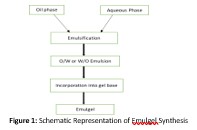
Schematic representation of Emulgel synthesis is shown in figure 1.
Emulsion Formation
The oily phase of emulsion was prepared by mixing Span 20 and liquid paraffin. To this, methyl paraben, propyl paraben, clove oil dissolved in ethanol were added. Tween 20 was mixed in water to formulate aqueous phase. Both solutions were heated at 70-80 Cº separately. Oily phase added to aqueous phase with constant stirring to develop stabilized emulsion.
Preparation of Gel
Transferred 150ml purified water to the compounding vessel (beaker). Added Carbopol 934 gradually and mixed well to homogenize until the solution becomes lump free. Heated isopropyl alcohol to a temperature of 59-63Cº in a beaker, then added celecoxib in it, mixed well until clear solution is obtained. Then added benzyl benzoate in it. Transferred it to step1 with slow continuous agitation. Added and mixed Methyl paraben sodium, Propyl paraben sodium and Diethanolamine in 240ml purified water for 10minutes. Continue mixing at fast rate till it become clear. Rose oil added for fragrant purpose. After continuous mixing for 30 minutes added rose oil drops in it and mix for 20minutes. Various compositions of
celecoxib emulgel were formed as shown in table 1.
Table 1: Composition of Celecoxib Emulgel (Various Formulations)
| Ingredients width="88">Formulation 1(F1) >Formulation 2(F2) >Formulation 3(F3) >Formulation 4(F4) | > Celecoxib width="88">500 >500 >500 >500 | > Isopropyl Alcohol width="88">32 >32 >32 >32 | > Carbopol 934P width="88">1.5 >2 >2.7 >3.5 | > Benzyl Benzoate width="88">2 >2 >2 >2 | > Diethanolamine width="88">2.4 >2.4 >2.4 >2.4 | > Propyl Paraben Sodium width="88">0.1 >0.1 >0.1 >0.1 | > Rose oil flavor width="88">0.4 >0.4 >0.4 >0.4 | > Liquid Paraffin width="88">7.5 >7.5 >7.5 >7.5 | > Tween 20 width="88">0.5 >0.5 >0.5 >0.5 | > Span 20 width="88">1 >1 >1 >1 | > Propylene Glycol width="88">5 >5 >5 >5 | > Ethanol width="88">2.5 >2.5 >2.5 >2.5 | > Methyl Paraben width="88">0.03 >0.03 >0.03 >0.03 | > Ethyl Paraben width="88">0.01 >0.01 >0.01 >0.01 | > Clove oil width="88">0.4 >0.4 >0.4 >0.4 | > Menthol width="88">4 >4 >4 >4 | > Purified Water width="88">176 >176 >176 >176 |
Characterization
Physical appearance
Emulsion formulation will be scrutinized visually for color, homogeneity, consistency and ph. The pH values of aqueous solution of jellified emulsion will be measured by pH meter. (Khullar, Kumar, Seth, & Saini, 2012).
Determination of pH
Digital pH meter was used to determine pH that was calibrated with standard buffer solution. The measurements were replicated thrice. (Vinod & Vani).
Rheological study
Different emulgel formulations viscosity was be determined at 25ºC by using a cone and plate viscometer and that will be connected to thermostatically controlled water bath. (Joshi et al., 2011).
Viscosity
The viscosity of formulations prepared, was determined at ambient temperature by using digital viscometer. (Basera, Kothiyal, & Gupta, 2015).
Swelling index
Swelling index of prepared emulgel will be determined by taking 1gm of gel on porous aluminum foil and then it would be placed separately in a 50ml beaker containing 10ml of 0.1N NaOH. Then the sample would be
removed from beaker different intervals and it will be placed to dry for some time later it will be reweighed.
Swelling index (SW)%= [(Wt –Wo) /Wo ] x100
SW % = equilibrium percentage swelling
Wo = original weight of the emulgel at zero time after time t
Wt. = weight of the swollen emulgel (Joshi et al., 2011).
Spreadibility
Spreadibility was determined by apparatus which will be suitably modified in the laboratory and used for the study. It will consist of a wooden block, which will be provided by pulley at one end. Spreadibility measured on the basis of ‘slip’ and ‘drag’ characteristics of emulgels. A ground glass slide will be fixed on block. An excess of emugel was placed on this ground slide. The emulgel then was sandwiched between this slide and another glass slide. A 1 Kg weight placed on the top of two slides for 5 minutes to expel air and to provide uniform film of the emulgel among slides. Then the excessive emulgel was scraped off from the edges. Shorter interval was indicating Spreadibility. Spreadibility was calculated by this formula,
S=M.L/T
S= Spreadibility
M= weight tied to upper slide
L= length of glass slides
T= time taken to separate the slides completely from each other (Vinod & Vani)
Extrudability Study
It was empirical test used to determine the strength that is essential to expel the material out from tube. This technique was adopted for analyzing emulgel formulation for Extrudability depending upon quantity in percentage of emulgel and emulgel extruded from lacquered aluminum collapsible tube when applied weight in grams required to extrude minimally 0.5cm ribbon of emulgel in 10seconds. (Singla, Saini, Joshi, & Rana, 2012).
Extrudability= applied weight to extrude Emulgel from tube (in grams) / Area (in cm)
Ex-vivo bio–Adhesive Strength Measurement
Shaven skin of mice was used to measure ex-vivo bio adhesive strength. The fresh skin of mice was cut into pieces, and it was washed with 0.1N NaOH. Out of them two pieces of skin were tied to two glass slides, out of them one glass slide was fixed on wooden box and other was tied to the balance. The right and left pans were balanced by adding extra weight. 1gm of Celecoxib Emulgel was placed between these slides having shaven skin of mice and extra weight was removed to remove air. The balance was kept in that position for 5minute. To left hand pan weight was added slowly until patch detached from skin. (Joshi et al., 2011).
The formula used to calculate bio-adhesive strength was as:
Bio adhesive strength = Weight required (in gm) / Area (cm2)
Drug Content Determination
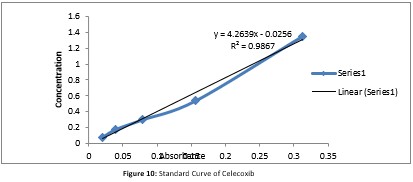
Spectrophotometer used to measure drug concentration jellified emulsion. It was measured by dissolving known quantity of jellified emulsion in solvent by sonication. Absorbance was measured after suitable dilution in UV/Vis spectrophotometer. (Joshi et al., 2011).
Stability Studies
The prepared emulgel was packed in aluminum collapsible tubes and was subjected to stability studies at 5 C, 25 C / 60% RH, 30 C /65 RH, and 40C / 75 RH for about 3 months’ period. Samples was withdrawn at 15day time intervals and physical appearance, pH, rheological properties, drug content and drug release content evaluated. (Mohamed, 2004).
Skin Irritation Test
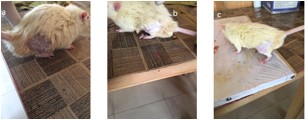
Sample of the test material of about 0.5gm was applied to each side (two sites per rabbit) by introducing under a double gauze layer to an area of skin. After 24-hour emulgel was removed. There was no irritation occurred that is why the test was passed. (Singla et al., 2012).
Results
Physical Examination of Emulgel
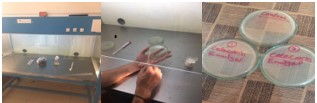
The Celecoxib Emulgel formulations were examined visually for their color, homogeneity, consistency and phase separation as shown in figure 2.
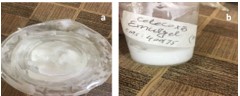
Figure 2: (a) Physical appearance of celecoxib Emulgel, (b) consistency and homogeneity of Celecoxib Emulgel
pH Determination
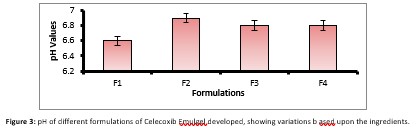
Digital pH meter was used to determine the pH of Celecoxib Emulgel that was calibrated with solutions of standard buffer. pH measurements of each preparation were repeated thrice. pH was found to be 6.6-6.8 as shown in figure 3.
Rheological Study
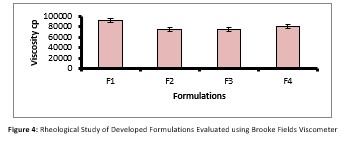
The viscosity of the Celecoxib Emulgels was determined separately using viscometer with spindle 4 and rpm 6 that was connected to thermostatically controlled circulating water bath and results were shown in figure 4.
The formulation of Emulgel using Carbopol 934 as gelling agent is more effective in thick formulation such as emulsions, transdermal and topical.
Determination of Viscosity
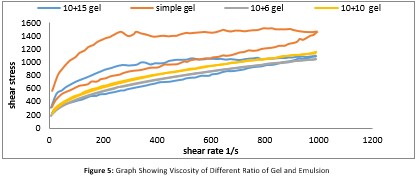
The viscosity of different prepared formulations was analyzed at ambient temperature by using Brookfield digital viscometer. For topical use rheological properties of pharmaceutical system effect the rate of release of active substances present in it. Viscosity of gel was measured in kept constant.
Swelling Index
Swelling index of the topical Celecoxib Emulgel
prepared was determined at different intervals shown in table 2.
Table 2. Swelling Index
| S.no width="160" rowspan="2" valign="top">Formulation width="319" colspan="3">Swelling Index percentage at different time intervals | > 30 min width="100">60 min width="91">90min | > 1 width="160" valign="top">F1 width="128">19.02% width="100">6.87% width="91">.68% | > 2 width="160" valign="top">F2 width="128">21.22% width="100">8.09% width="91">.87% | > 3 width="160" valign="top">F3 width="128">22.33% width="100">9.629% width="91">.95% | > 4 width="160" valign="top">F4 width="128">25.34% width="100">11.37% width="91">1.06% |
Spread ability
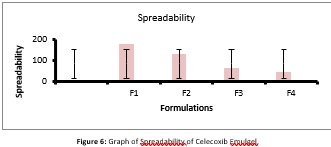
When topical therapy used its efficacy depends upon the factor that how evenly the formulation is spreaded that it delivers the standard dose in patients. This is specifically important with the formulations of potent drugs. Spreadability of celecoxib emulgel is shown in figure 6.
Extrudability Study Emulgel Topical
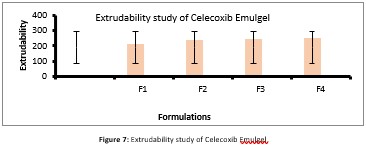
It is regular factual test that was performed to determine the force needed to extrude Emulgel from the tube. This technique was applied for measurement of applied force in the rheogram region comparable to rate of shear that exceeds the value of yield and showed related plug flow. Currently, this technique ratifies for analyzing preparation of emulgel for Extrudability that was based upon the quantity of emulgel percentage and when weight in grams was applied on the aluminum collapsible tube emulgel extruded out at least 0.5cm of celecoxib emulgel in 10seconds and results were shown in figure 7. If more quantity extrudes out, then it shows better Extrudability.
Ex vivo Bio Adhesive Measurement of Strength of Celecoxib Emulgel Topical
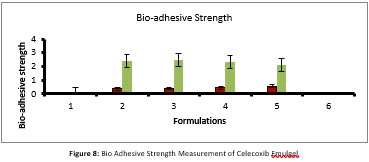
The improved technique was used for determining the bio adhesive strength. The fresh skin of mice was cut into pieces and washed with 0.1 N NaOH. Two pieces were picked and tied to the two slides of glass separately out of which one slide was fixed on the piece of wooden and other piece of skin was tied with the balance on right hand side. Emulgel pressure was applied on it to remove air. The balance was kept in this same position for 5minutes. Weight was added to it slowly at 200mg /min to the pan on left hand until patch was detached from the surface of skin. (Joshi baibhav2011). The weight that was needed to detach/separate the Celecoxib Emulgel from the surface of skin gave determination of bio-adhesive strength and results were shown in figure 8
Solubility Studies of Celecoxib
Solubility of Celecoxib in different medias was observed by dissolving it in 0.1N Hcl, acetate buffer, phosphate buffer and purified water and resukts were shown in table 3.
Table 3: Solubility Studies of Celecoxib Emulgel in Different Media
| S.no width="247" valign="top">Media width="126">Solubility in mg/ml width="132">Solubility in mg/250ml | > 1 width="247" valign="top">0.1 N Hcl width="126">0.0272 width="132">6.8 | > 2 width="247" valign="top">pH 4.5 Acetate Buffer width="126">0.0252 width="132">6.3 | > 3 width="247" valign="top">pH 6.8 Phosphate Buffer width="126">0.015 width="132">3.8 | > 4 width="247" valign="top">pH 7.4 Phosphate Buffer width="126">0.0148 width="132">3.7 | > 5 width="247" valign="top">pH 12 tribasic sodium phosphate buffer width="126">0.572 width="132">143 | > 6 width="247" valign="top">Purified water width="126">0.0204 width="132">5.1 |